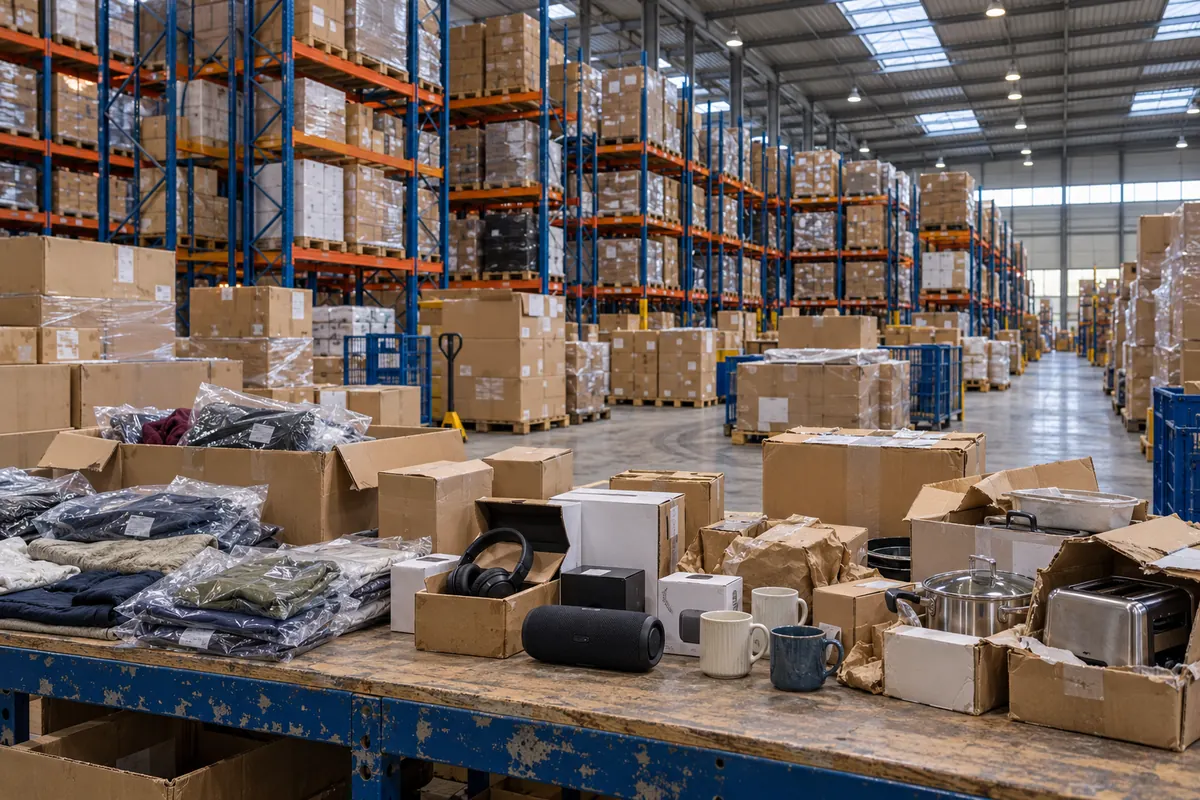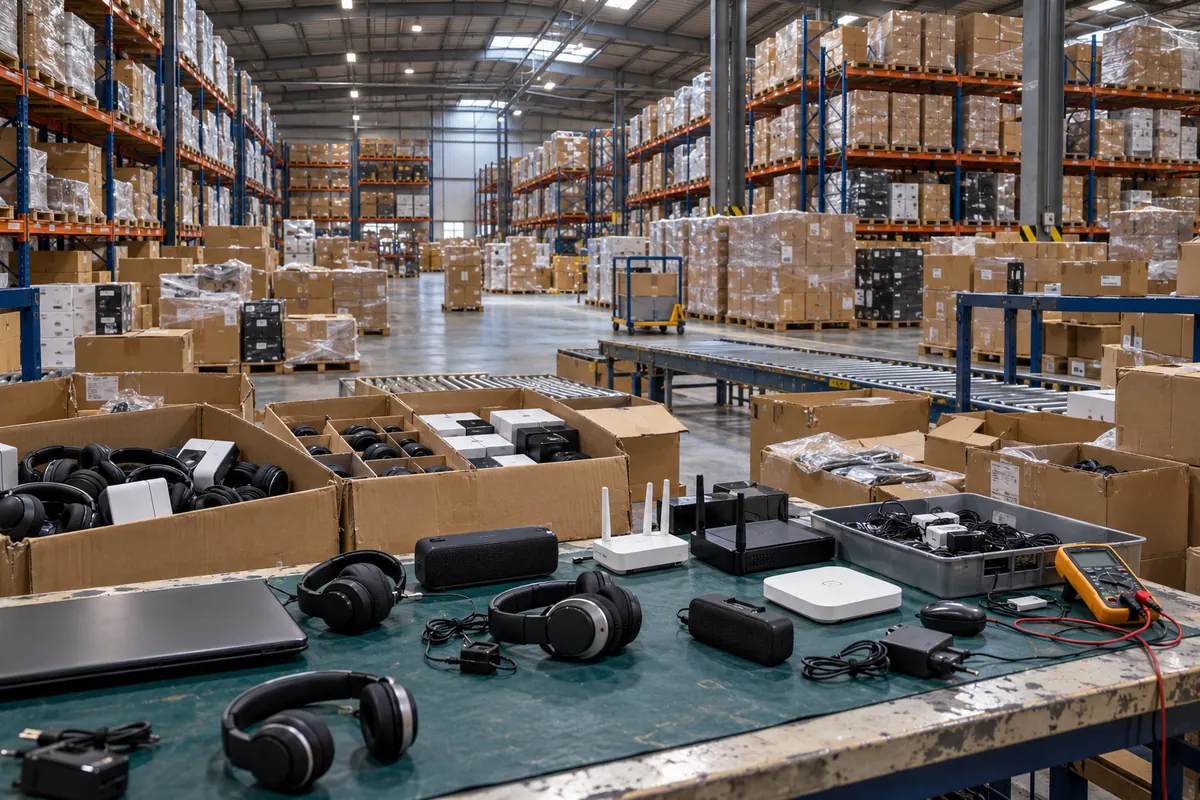
An electronics returns handover should connect the stock-owning company, the current lot list, the scope of any testing and the person authorised to release the goods. The buyer and warehouse should be discussing the same models, quantities and known exceptions.
This guide helps brand inventory, reverse-logistics and warehouse teams coordinate that handover. For the product-level manifest, start with our surplus electronics checklist.
Assign responsibility for the lot information
Identify who maintains the stock list, who can explain the inspection records and who approves the sale. These may be separate colleagues or one person, depending on your business.
Include the warehouse contact when confirming physical availability and release arrangements. Where a third-party facility holds the stock, make the inventory-owning company clear. The facility’s address alone does not identify the seller or the person who can approve the transaction.
An initial enquiry can explain that approval or reconciliation is pending. Treat those as open decisions rather than implying that the goods are already cleared for collection.
Keep testing claims tied to records
For each model or group, distinguish what has been inspected from what remains untested. Record the test scope and whether it covers every unit or a sample. Packaging condition, cosmetic condition and functionality are separate facts.
Here is a hypothetical example, not a customer case:
A lot contains 300 speakers. Records show a power-on check for 80 units, of which five did not power on. The other 220 have no recorded test. The overview should retain those groups and explain that power-on was the scope of the check. It should not describe the entire lot as tested working, or infer a fault rate for the untested units.
If the test record does not identify which units were checked, state that limitation. Avoid presenting a sample result as traceable unit-level evidence.
Make exceptions visible before an offer is discussed
List missing accessories, known faults, account locks and unresolved device-data status alongside the relevant model or group. “Open-box” does not settle any of those questions.
For devices connected to accounts or containing data, the stock owner should follow the applicable manufacturer’s transfer guidance. For example, Apple’s device-transfer instructions address personal information and account access. Use instructions for the actual product; a stock handover checklist is not a substitute for those steps.
Do not put customer records, device credentials or extensive identifiers into a public enquiry. Begin with a summary and agree a suitable channel for further information. Do not assume that an inventory buyer provides certified data erasure or can remove account locks.
Disclose known safety concerns before discussing collection. Acceptance and handling need to be resolved for the actual goods; a general inventory enquiry is not approval to include every item in a pickup.
Use one dated manifest for the buying discussion
Give the proposed lot a reference and version date. Keep the models, variants, quantities, test scope, included accessories and warehouse locations together. Record which quantities are estimates and which have been reconciled.
If stock moves into or out of the lot, share the change with the buyer before confirming the transaction. Keep previously shared versions identifiable so that an old quantity is not mistaken for the current offer.
Raise any brand or channel requirements with the colleague responsible for those decisions. The prospective buyer must discuss the specific requirements; a generic description of bulk buying does not establish agreement.
Connect approval to the warehouse release
Before handover, confirm the agreed manifest version, the authorising contact and the warehouse reference. Check that the cartons or pallets being released correspond to the agreed lot and record discrepancies for resolution.
If the stock is spread across locations, identify the quantities and contact at each site. Discuss collection arrangements against those actual locations rather than assuming every part of the lot is ready at the same time.
SR Infotech has its own logistics for agreed pickups across India. Collection arrangements and acceptance are discussed directly for each lot.
Begin a direct buying conversation
Share your company, role, models or category, approximate quantities, known condition and stock locations. Mention any testing limits and whether release approval is complete or pending.
SR Infotech buys surplus electronics and return lots directly from brands and retailers, including commercially suitable untested stock. Our brand-team buying page explains how to involve the relevant colleagues.
Preparing an electronics returns release? Discuss your company’s inventory.