Start with pairs, sizes and known condition
A useful footwear stocklot overview gives a buyer the number of matched pairs by style and labelled size, the size system used, the known condition and the stock location. Describe the shoe and its box separately, and identify any single or mismatched shoes.
SR Infotech reviews bulk footwear inventory from brands, retailers and ecommerce businesses across India. This guide helps your team prepare a clearer buying enquiry without publishing commercial terms or conducting an extensive audit before making contact.
Count matched pairs rather than loose shoes
State the unit of measure. “800 pairs in 24 cartons” tells a different story from “800 shoes” or “24 cartons of assorted footwear.” If your count is an estimate, label it accordingly.
For each style, record matched left and right pairs together. Keep known single shoes, mismatched sizes and incomplete sets in separate groups rather than including them silently in the saleable-pair total. Mention whether your figures come from a physical count or existing stock records.
When cartons contain assorted sizes, explain the packing basis. Do not imply that each carton contains the same size mix unless your records confirm it.
Keep the labelled size system visible
Include the size as printed on the product or box, along with the system your records use, such as UK, EU or US. Avoid combining those labels into one unexplained numeric column or guessing an equivalent size.
A simple stock sheet can include:
- Brand and style or SKU
- Footwear type, colour and labelled size
- Size system shown on the product or packaging
- Number of matched pairs
- Known shoe condition and separate box condition
- Carton reference and warehouse location
Identify uneven size runs clearly. A bulk buyer needs to understand the distribution of pairs across the available sizes, not only the total quantity.
Separate shoe condition from box condition
An affected outer box does not establish the condition of the footwear inside. Likewise, an intact box does not confirm that the shoes are unused or complete.
Describe known signs of wear, marks on uppers, sole damage, missing laces or other missing parts in plain language. For customer returns, state what has actually been checked and what remains unknown. If your team uses internal grades, explain those grades instead of assuming the buyer uses the same definitions.
Keep surplus, returned and packaging-damaged groups identifiable where your records allow it. You can read more about stock origin and condition before preparing a mixed lot.
Match the photos to the stock sheet
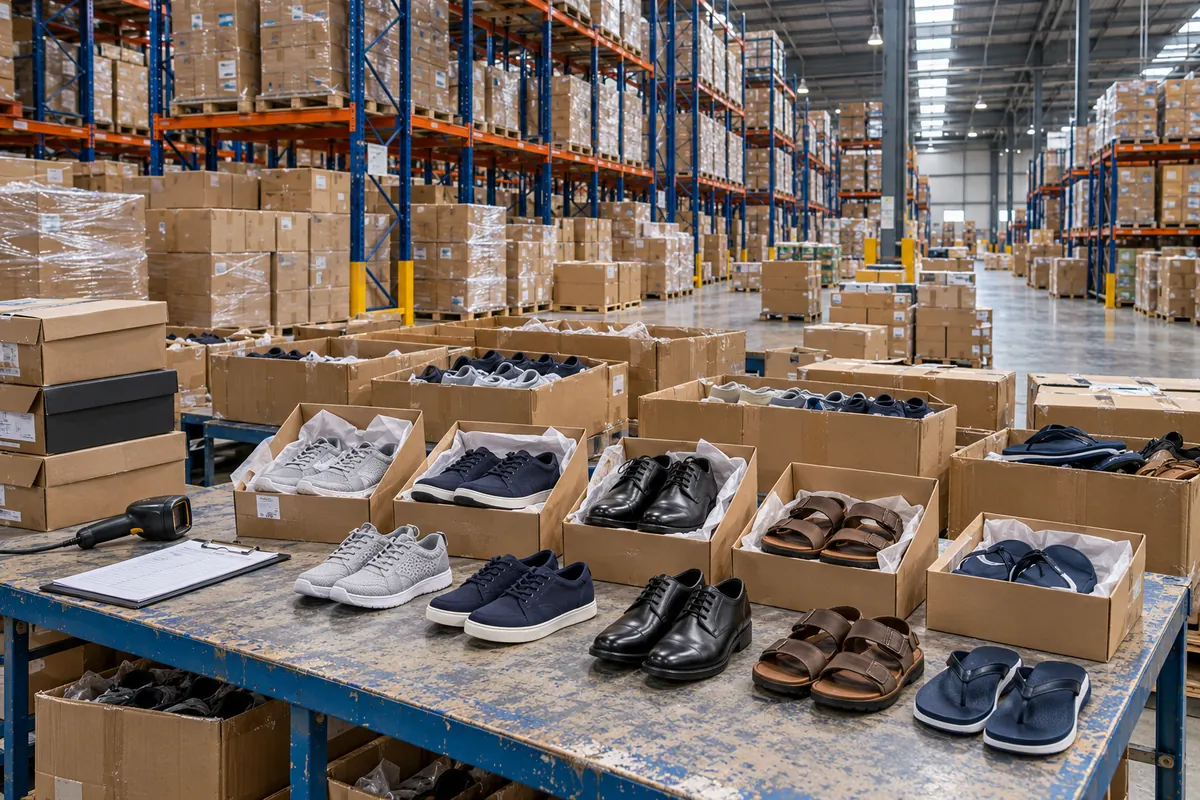
Photograph representative pairs, the labelled size, the soles and any known exceptions. Include the box where packaging condition matters, plus an overview of the cartons or pallets containing the lot.
Use the style or SKU in filenames so the buyer can connect each image to the stock list. Say when images represent a sample; do not suggest that every pair was inspected if it was not.
Share any brand, territory, resale-channel or labelling restrictions during the commercial discussion. Keep confidential documents and unrelated customer data out of the public enquiry form.
For the broader spreadsheet structure, see our surplus stock-list checklist.
Start a buying conversation
You can start with the footwear type, approximate pair count, known condition and stock location. Mention whether a size breakdown, stock sheet and photos are available, then agree how to share those files.
SR Infotech buys bulk footwear stocklots and has its own logistics for pickup across India. Acceptance, pricing and collection arrangements are discussed for the actual lot.
Have footwear stock to move? Discuss your footwear inventory.