Before offering footwear returns for bulk liquidation, reconcile the stock-system total with physical matched pairs, keep unchecked returns identifiable, and confirm which quantities your business has approved for release. Return records, loose shoes and complete pairs are different counts.
This is a working approach for a footwear brand’s returns, inventory and warehouse teams. For the detailed style and size columns, use our footwear stocklot preparation guide.
Establish what the system count means
Check whether the report represents return requests, received parcels, individual shoes or footwear pairs. A return requested by a customer may not yet be physically received. A received box may also need its contents checked.
Choose a snapshot date and identify the warehouse or return batch covered. Ask the receiving team which entries are still in transit, under investigation or already assigned to another internal route. Keep these outside the confirmed offered quantity until their status is resolved.
For saleable-pair counts, use matched left and right shoes of the same style, labelled size and colour. Describe the actual basis of your count if that matching has not yet been verified.
Keep pair matching and condition separate
A matched pair is not automatically unused or defect-free. Your review needs two separate questions: is the pair complete, and what is known about its condition?
Use groups that your team can substantiate:
- Matched pairs with recorded inspection findings.
- Returns physically received but not yet checked.
- Known single shoes or mismatched pairs.
- Stock held back for a separate internal decision.
Record wear, sole or upper damage and missing parts separately from box damage. Explain internal grades in plain language so another business can understand them. Do not relabel unchecked returns as fresh stock because the packaging looks intact.
Show how discrepancies affect the lot
Consider this hypothetical reconciliation, included to illustrate the method:
A system shows 500 expected pairs in a return batch. The warehouse confirms 460 matched pairs and 20 individual shoes. Records for the remaining expected returns still need investigation.
The overview should state 460 confirmed matched pairs, list the 20 individual shoes separately, and identify the unresolved records. Dividing 20 loose shoes by two does not establish another ten matched pairs.
Within the 460 matched pairs, inspection may still be incomplete. Report that status separately. The count can be confirmed while the condition remains unknown.
Connect the list to release approval
The stock-owning brand or retailer should identify who can approve the sale. A returns or warehouse manager can prepare the overview and begin the discussion, but physical custody alone does not establish authority to release the goods.
If your stock is held at a third-party fulfilment centre, include your company’s approving contact and the facility’s handover contact in the appropriate stage of the discussion. Confirm which batch references the release covers.
Keep a dated version of the list and record additions or removals. A buyer reviewing an earlier file needs to know if the available pair count or condition mix has changed.
Prepare a handover your warehouse can follow
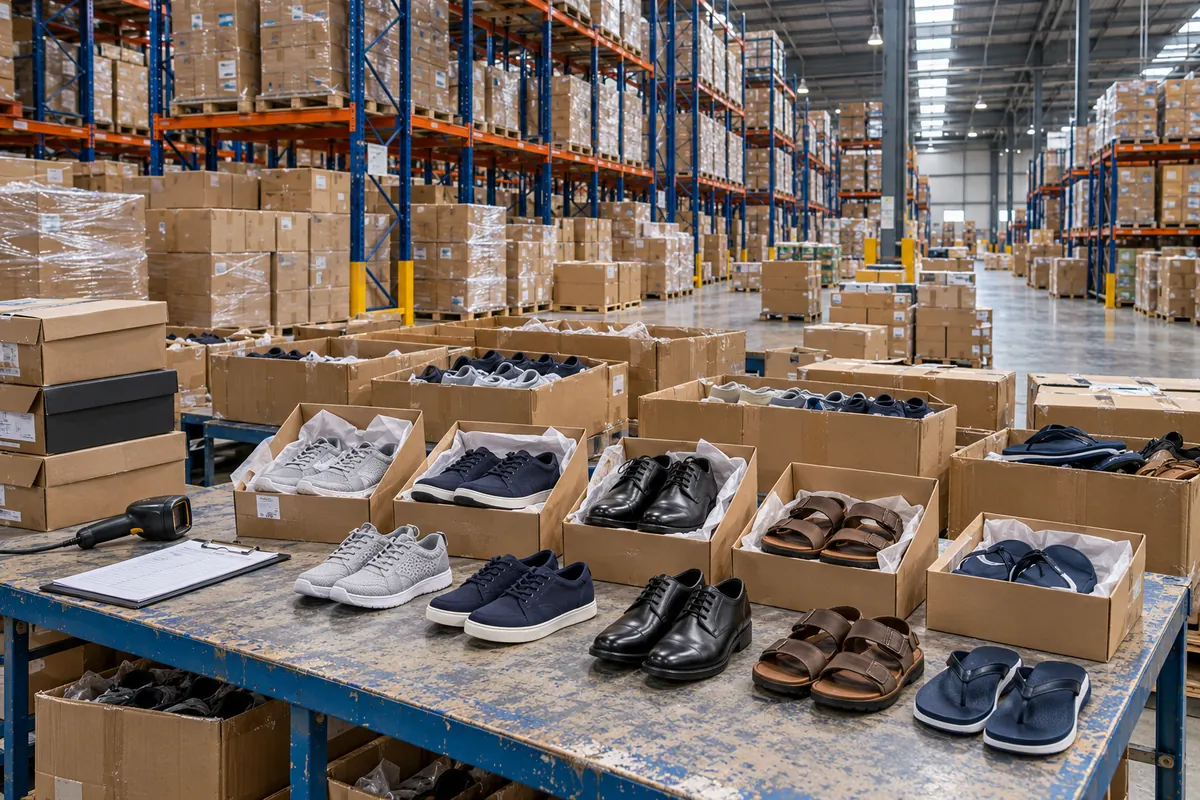
Link carton references to the style, labelled size system, pair count and condition group. Avoid mixing checked pairs and unresolved returns without an explanation. Representative photos should match the same references as the list.
Before collection, confirm the agreed lot and any differences with the buyer. Discuss access, loading and pickup arrangements for each location. Raise brand or resale-channel requirements before agreeing the transaction.
Customer return records can contain names, contact details and order information. Prepare a stock-focused overview for the enquiry and keep unrelated customer information out of it.
Start with the information your team can confirm
Send your company name, your role, approximate matched-pair count, known condition, warehouse location and approval status. Identify unchecked or unresolved quantities explicitly rather than waiting for every record to be perfect.
SR Infotech reviews surplus footwear and bulk return lots directly with brands and retail businesses. Our own logistics collects agreed stock across India. Learn more about direct buying for brand teams.
Managing your company’s footwear returns? Discuss the lot with SR Infotech.